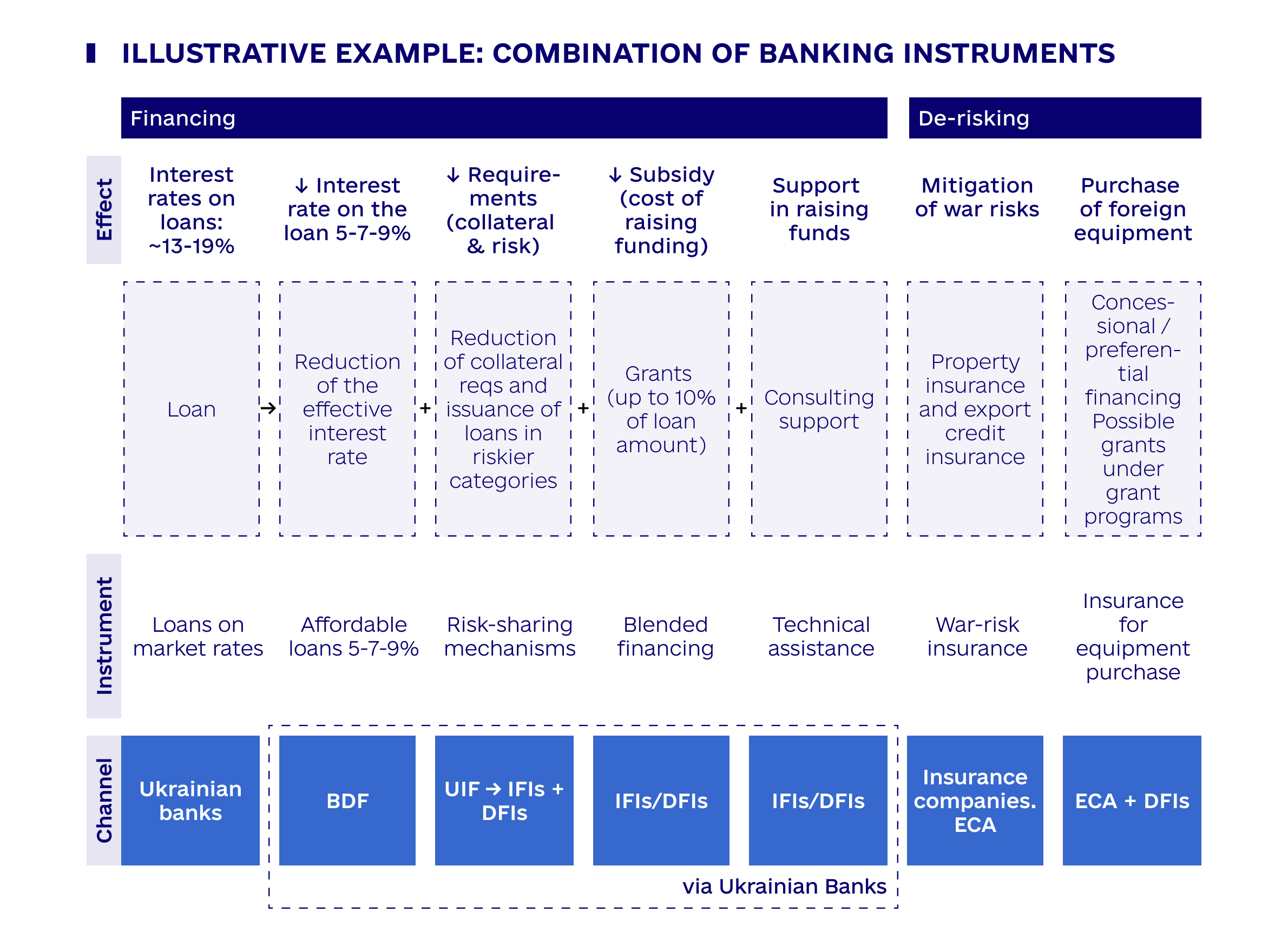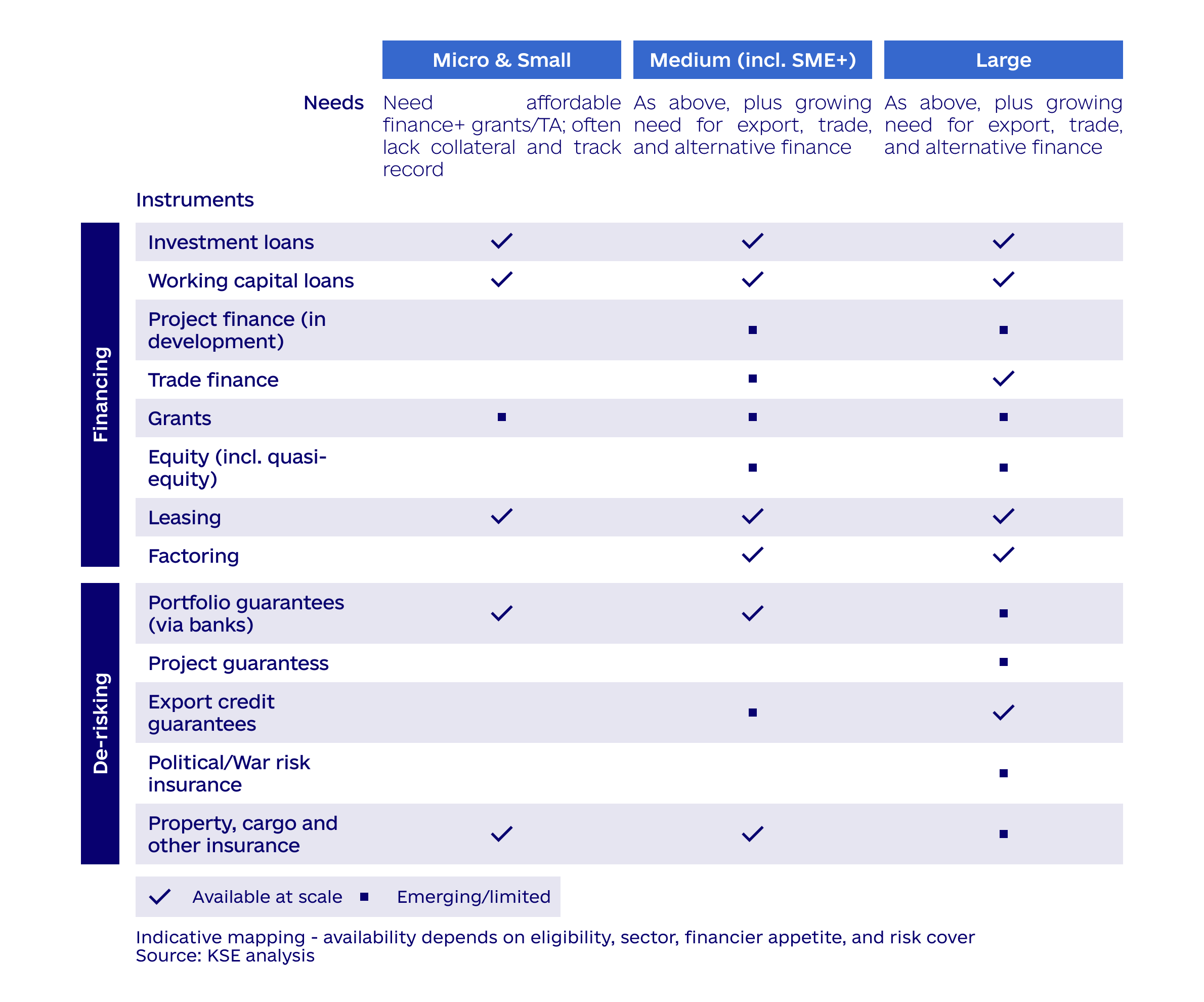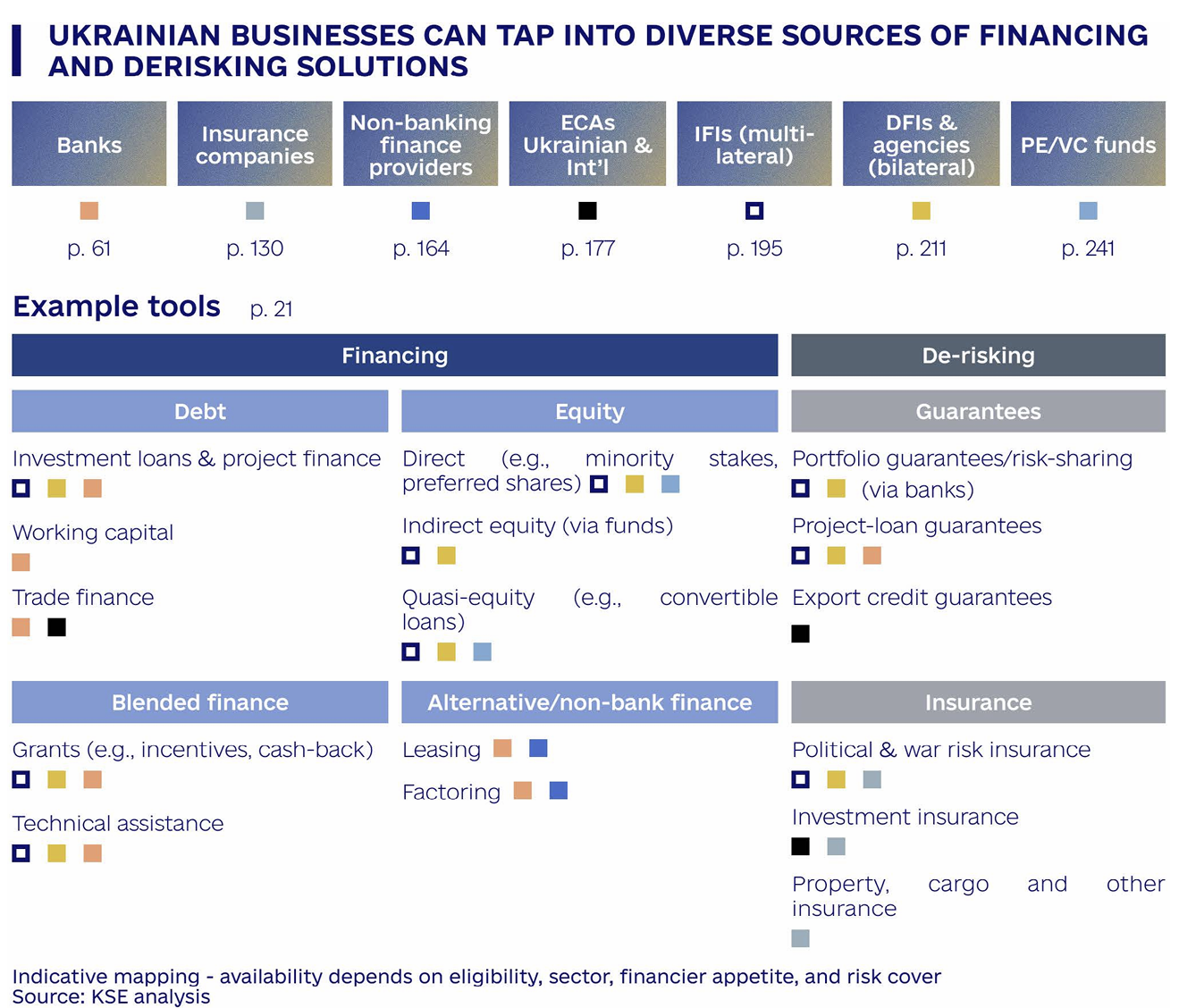
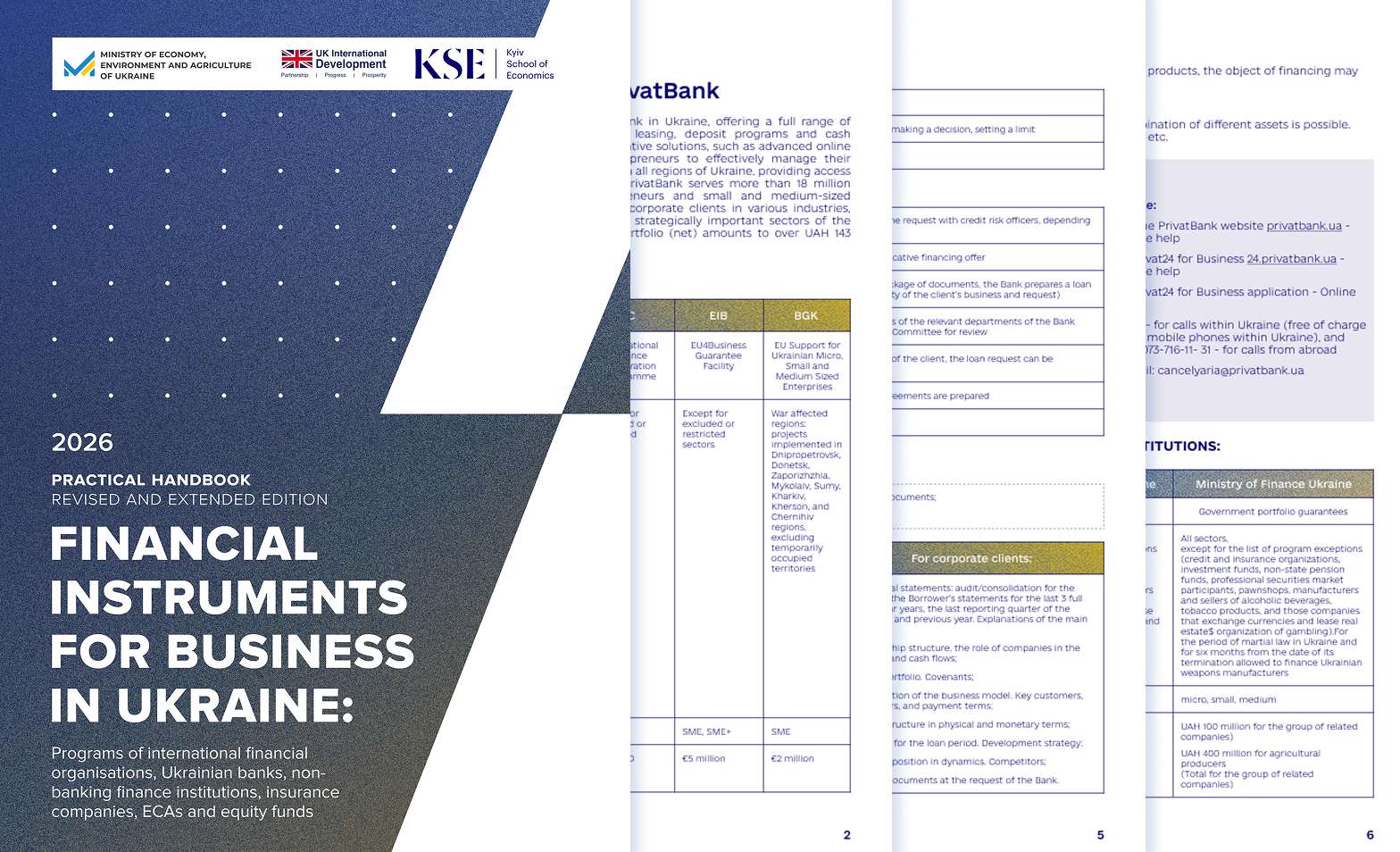
The Handbook “Financial Instruments for Business in Ukraine” systematises the ecosystem of financial instruments and explains how it works in practice. The Handbook compiles information on 65 financial institutions and their products – loans, guarantees, insurance, grants, leasing, factoring and investment instruments. For each product, the Handbook sets out the financing terms, business requirements, usage scenarios and contact details.
1. Preparation
Refine financing purpose by analyzing financial statements and preparing a basic project profile.
2. Shortlisting options
Screen potential financiers (banks, DFIs, IFIs, ECAs) to narrow down realistic options and select the engagement format.
3. Initial engagement
Initiate outreach by sending a teaser/concept note, holding preliminary talks, and passing a “fit-to-mandate” check.
4. Due diligence
Prepare for due diligence by setting up a data room, updating the financial model, and engaging advisors for large projects.
5. Due diligence & Appraisal
Conduct due diligence by reviewing financial, technical, legal documents, completing ESG and risk assessment, and obtaining PRI/WRI, if needed.
6. Structuring & Approval
Agree financing terms by finalizing term sheets, obtaining internal approvals, and drafting key agreements.
7. Closing & Disbursement
Reach financial close by signing agreements, fulfilling conditions precedent, and completing disbursement set-up.
8. Implementation
Monitor implementation by reporting on financial and ESG aspects and updating financiers on project changes.