Helios Strategia and €10.8 million for seven years from Oschadbank: how to raise money for energy in Ukraine during wartime.
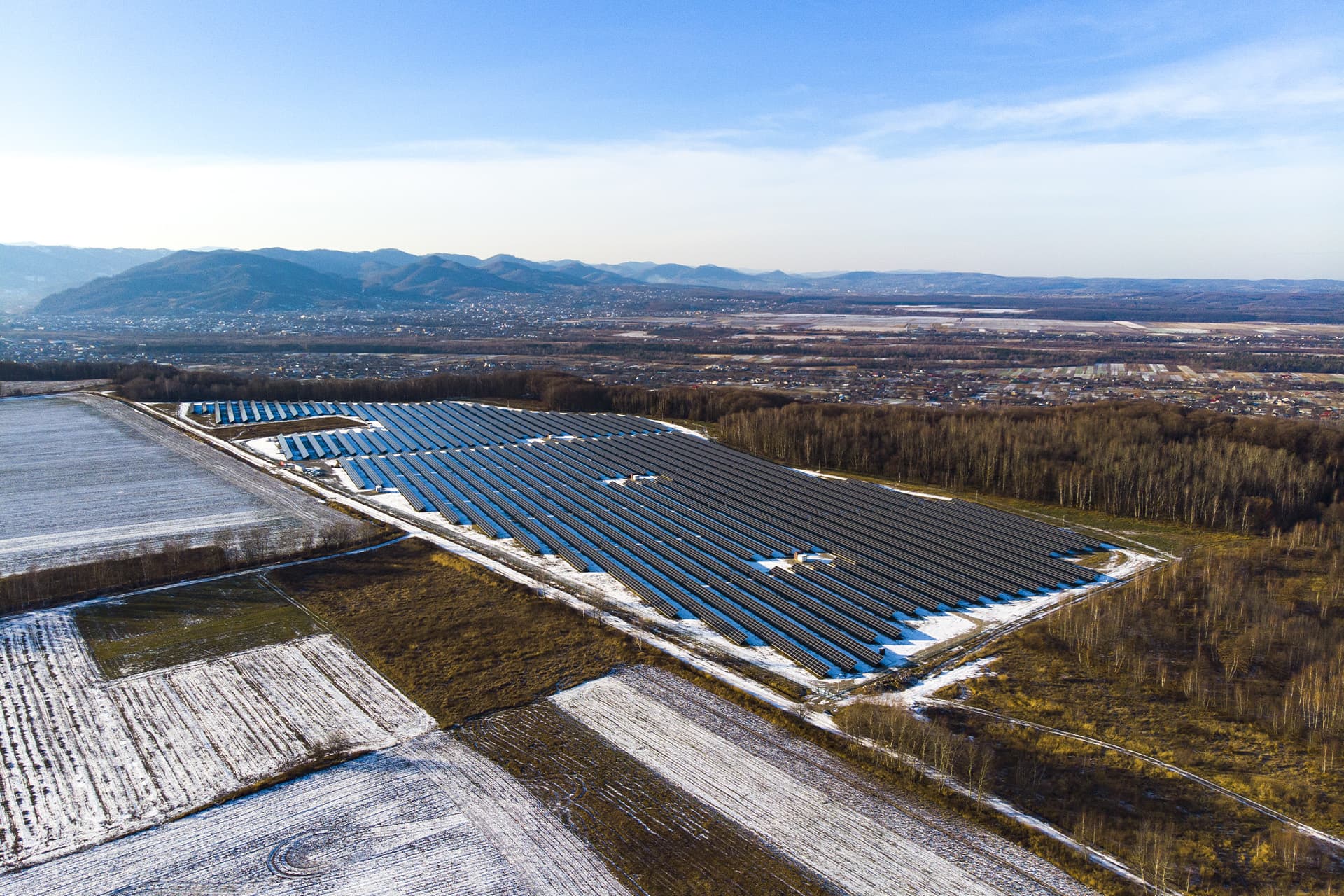
Projects that enhance energy resilience are put to the toughest test during wartime – the trust of financiers and the reality on the ground. The Helios Strategia project has raised €10.8 million from Oschadbank for 7 years to build infrastructure that will function both during attacks and during the recovery period.
We spoke with Vladislav Shevchenko, commercial and marketing director at Helios Strategia, about how businesses can obtain long-term financing today, what really deters investors, and why local generation is becoming a security factor.
– Oschadbank loaned you €10.8 million for seven years. What was the main argument that convinced the bank to finance an energy project during the war?
– Financing during wartime is always a test of the maturity of a business model. For Oschadbank, the key factor was that we were not only talking about the construction of a solar power plant, but also about sustainable infrastructure that would remain necessary in any scenario for the country’s development – during the war, in the recovery phase, and in the long term.
We showed that the project operates in a region with a lower level of physical risk, has a predictable cash flow, is integrated into the overall logic of Ukraine’s energy system transformation, and does not depend on a single source of income or regulatory decision. Particular emphasis was placed on project management: a transparent structure, clear responsibilities, and realistic deadlines.
– How difficult is it to attract long-term investment in Ukraine now: are military risks or bureaucracy the bigger obstacle?
– War risks are the first thing everyone sees, but they are not always the main issue. For banks and international financial institutions, the war in Ukraine is no longer an “unknown variable”: the risks have been described, calculated and partially offset through insurance, guarantees and structural instruments.
It is much more difficult to work with internal system constraints – lengthy procedures, ambiguous interpretation of rules, slow approvals. For long-term money, not only the security of the asset is critical, but also the speed of passing through all stages, from joining the network to final financial closure.
In fact, today’s investors are willing to take on the risk of war, but they are not willing to live with regulatory uncertainty. Therefore, the main challenge is not the war itself, but the ability of the state and regulatory systems to operate at a wartime pace.
– You managed to obtain both bank financing and a British grant. Which is easier to secure – a loan or a grant, and why?
– At first glance, it seems that a grant is easier. In reality, it is one of the most complex instruments. Grants require full compliance with the donor’s strategic priorities, lengthy selection procedures, approvals and detailed reporting at each stage of implementation.
In this sense, a loan is a more pragmatic instrument. If a project has a clear economy, predictable cash flow and a responsible borrower, the bank is ready to discuss financing even in wartime conditions. This conversation is about numbers, not declarations.
That is why we do not compare these instruments directly. Grants work well for social, pilot or infrastructure components, while loans are better suited to large-scale solutions that must be self-sufficient and operate for decades.
Why such projects are important now
– What does “energy resilience” mean to you in the context of war: saving money, security, or the ability of communities to weather blackouts?
– Energy resilience is not an abstract concept and is not just about saving electricity. For us, it is the ability of the system to provide basic functions of society even during massive attacks on infrastructure.
It is about ensuring that hospitals, water supply, communications, critical services and businesses do not depend on a single power source. When the power goes out, but community life continues – that is resilience.
In wartime, energy becomes an element of national security. Therefore, we evaluate each project not only in terms of economic indicators, but also in terms of how much it increases people’s ability to survive crises without losing control.
– Why are you focusing on local solutions (solar stations + batteries) rather than just ‘large-scale’ generation and network repairs?
– Large-scale generation remains the backbone of the energy system, but the war has shown its vulnerability to targeted strikes. That is why local solutions have become a critically important addition, not an alternative.
Solar stations with storage facilities, integrated at the community or individual facility level, provide flexibility and responsiveness. They reduce the load on the grid, allow for local consumption balancing, and mitigate the effects of accidents.
– Zakarpattia is a relatively safe region of Ukraine. Why are you building a 22.35 MW power plant there, and what effect will it have on the people and businesses in the region?
– Zakarpattia currently serves as an energy and economic rear. The region is attracting relocated businesses, new manufacturing facilities and logistics hubs, which is creating stable demand for electricity.
The construction of a 22.35 MW power plant is a response to this demand. It strengthens the regional grid, reduces the generation deficit and creates more predictable conditions for business.
For the region, this means not only additional megawatts, but also tax revenues, jobs, and a signal to investors that the region is ready for long-term development even in difficult times.
The Vakulove case in Dnipropetrovsk Oblast
– The Critical Energy Resilience for Ukraine project in Vakulove is a story about restoring trust, security, and life prospects to the community. What has changed for people there since the project was launched?
– The most important change is the feeling of stability. When critical facilities continue to operate during blackouts, people stop living in a constant state of anxiety.
The project made it possible to create an autonomous outpatient clinic, and social institutions and basic infrastructure now operate without power outages. It is not only about comfort, but also about maintaining the normal rhythm of community life.
In a broader sense, this is a story about restoring trust in infrastructure, in partners, and in the fact that even in frontline regions, systemic solutions are possible, rather than temporary “patching up.”
– How was it determined who to help first: the clinic, the orphanage, other critical facilities, and who made the decisions on the ground?
– Priorities were not set in offices, but together with the community. We worked with local authorities and facility managers to understand where power outages had the most critical consequences.
The top priority was facilities that directly affect people’s lives and health: medicine, social institutions, and basic services. It was a pragmatic approach, not a formal list.
Our role was to translate these priorities into engineering solutions that actually work in crisis conditions.
– To explain simply: what is the focus of the system – does it provide light during blackouts or does it also allow you to manage electricity so that there is enough for the most important needs?
– The focus is not just on the availability of electricity, but on managing it. During blackouts, resources are limited, and the key question is how to distribute them.
The system allows you to prioritize consumption, balance loads, and provide power where it is critically needed. This is a fundamentally different approach than simply providing backup power.
In fact, it is a transition from passive to managed energy resilience.
Scaling and the future
– Is it possible to quickly scale such solutions to hundreds of communities – and what is the main limitation today: money, equipment, people, connection rules?
Technically, yes. The technology, equipment, and engineering solutions already exist. The question is not one of possibility, but of speed.
The main limitations today are access to financing for communities, local human resources, and lengthy connection procedures. Without a systemic framework, scaling takes place on a case-by-case basis rather than on a mass scale.
Once clear rules and standard models are in place, such solutions can be implemented in hundreds of communities simultaneously.
– What is the minimum “resilience kit” you would recommend for a typical community: what is essential to survive prolonged outages?
– We are talking about a basic configuration that allows a community to remain manageable during prolonged outages.
This includes a local power source, energy storage devices, a priority distribution system, trained personnel, and clear action plans. Without this, any energy resilience remains a declaration rather than a practical tool.
– What do you think is most needed from the state and partners to make such projects happen faster and more often: simplified procedures, guarantees, co-financing, standards?
– First of all, quick and clear rules. Simplified procedures, standard technical solutions, co-financing mechanisms, and guarantees for investors can significantly speed up the implementation of such projects.
Energy resilience should be viewed not as separate initiatives, but as an element of state security and recovery policy. When the state, business, and partners work with the same logic, such projects cease to be the exception and become the norm.