From $15M in Series A Funding to an IPO on Nasdaq: How Ukrainian Miltech Startup Swarmer Made Its Way to the Public Market
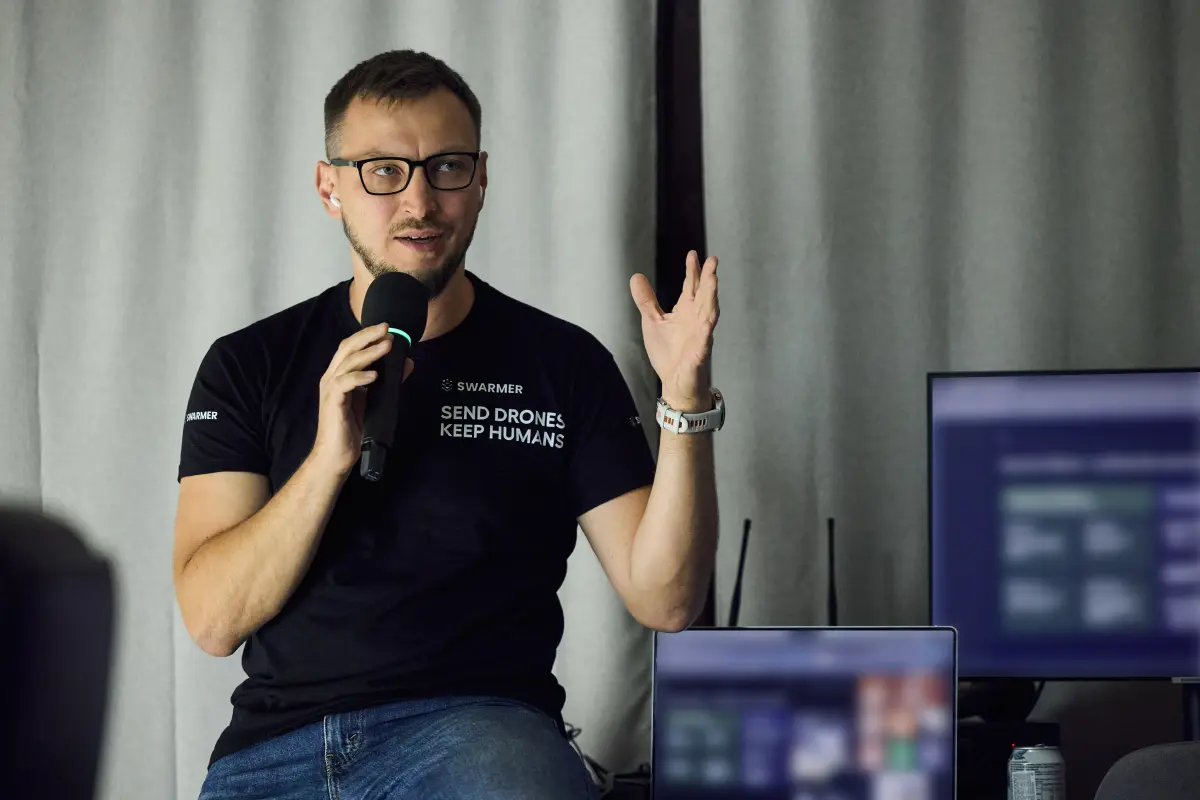
Swarmer is a Ukrainian technology company that develops software for coordinating swarms of drones. Its solutions enable drones to operate in a coordinated and partially autonomous manner, reducing dependence on the number of operators. It is precisely these technologies that are becoming a key element of modern warfare.
In March 2026, Swarmer went public on the Nasdaq stock exchange in the U.S.: 3 million shares were offered at $5 each, and within the first few days of trading, the stock price surged – peaking at over $60 – before remaining volatile and, as of mid-April, trading at around $40 per share, with a market capitalization of approximately $440-450 million. For the company itself, this meant raising new capital and transitioning to strict requirements regarding reporting, transparency, and communication with the market. For Ukrainian miltech, this is one of the first such high-profile examples of entering the global public market during a major war.
In an interview with the KSE Institute, Swarmer founder and CEO Serhiy Kuprienko explains what an IPO means in practice for a company operating amid a full-scale invasion, what the journey through previous funding rounds looked like, how to convince investors during active hostilities, and what those preparing for their first major fundraising round should know.
– What does an IPO mean for Swarmer? Is it a tool for raising capital, a peak in reputation, or a strategic transition to a new status?
– Everything together. First and foremost, this company was built from day one with an eye toward a future market debut. We were ready for this. And when we started seriously discussing an IPO, we realized that we were actually much closer to it than we thought, despite being in the early stages.
First and foremost, it confirms that we have passed a rigorous audit and are ready to trade on Nasdaq. This is probably one of the strictest sets of requirements for a company. Overall, it means access to broader financing on clear terms, as well as access to entirely different financial instruments for engaging with the market. Additionally, we aim to ensure that public investors, in the broadest sense, have access to shares of companies whose technologies have been proven in real-world conditions.
For us, this also means working effectively with the market and establishing a fair valuation. So yes: this is a major step for the ecosystem, but for us, it’s just part of a long-term development plan.
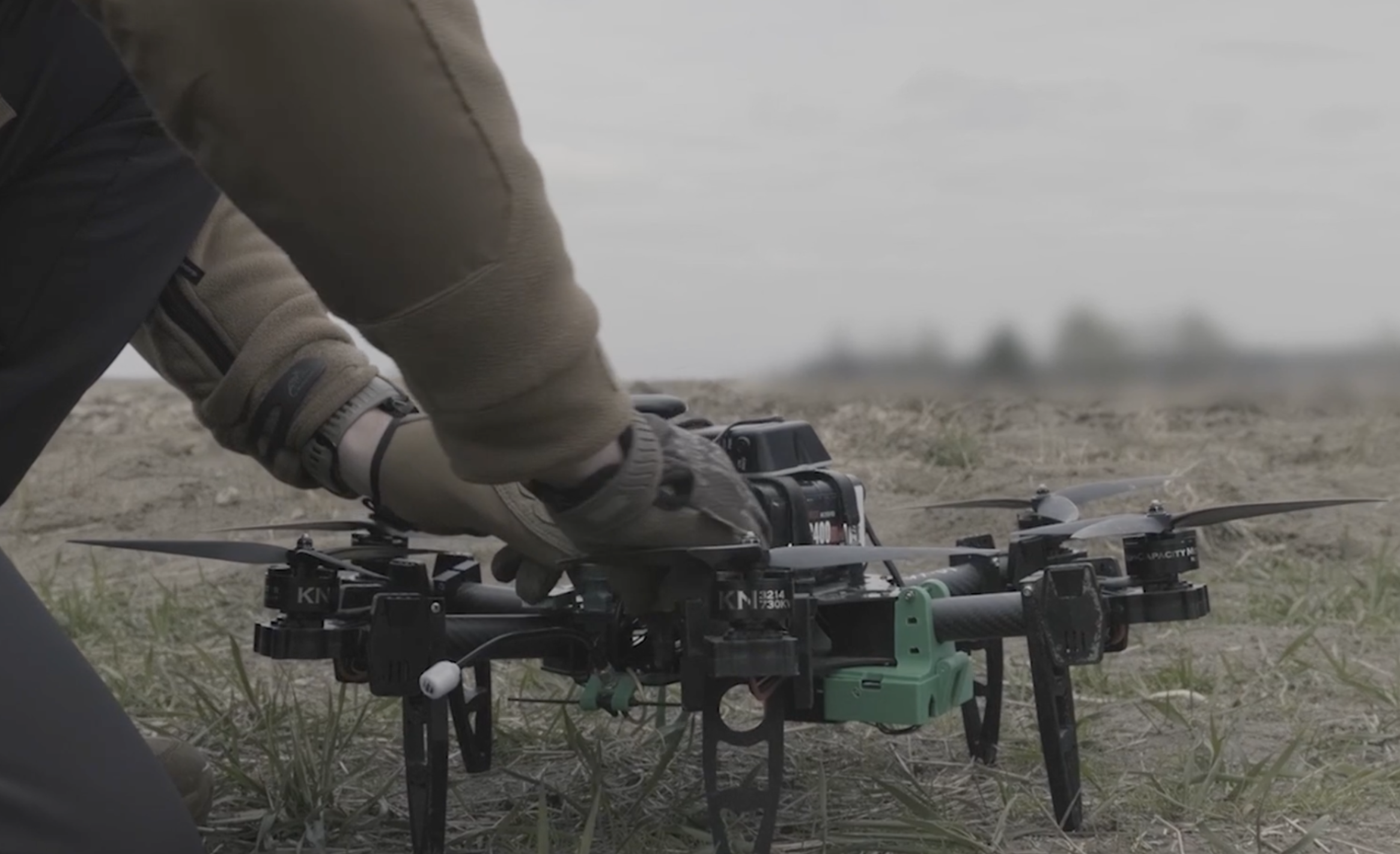
– What problem does Swarmer solve, and why is it attractive to investors?
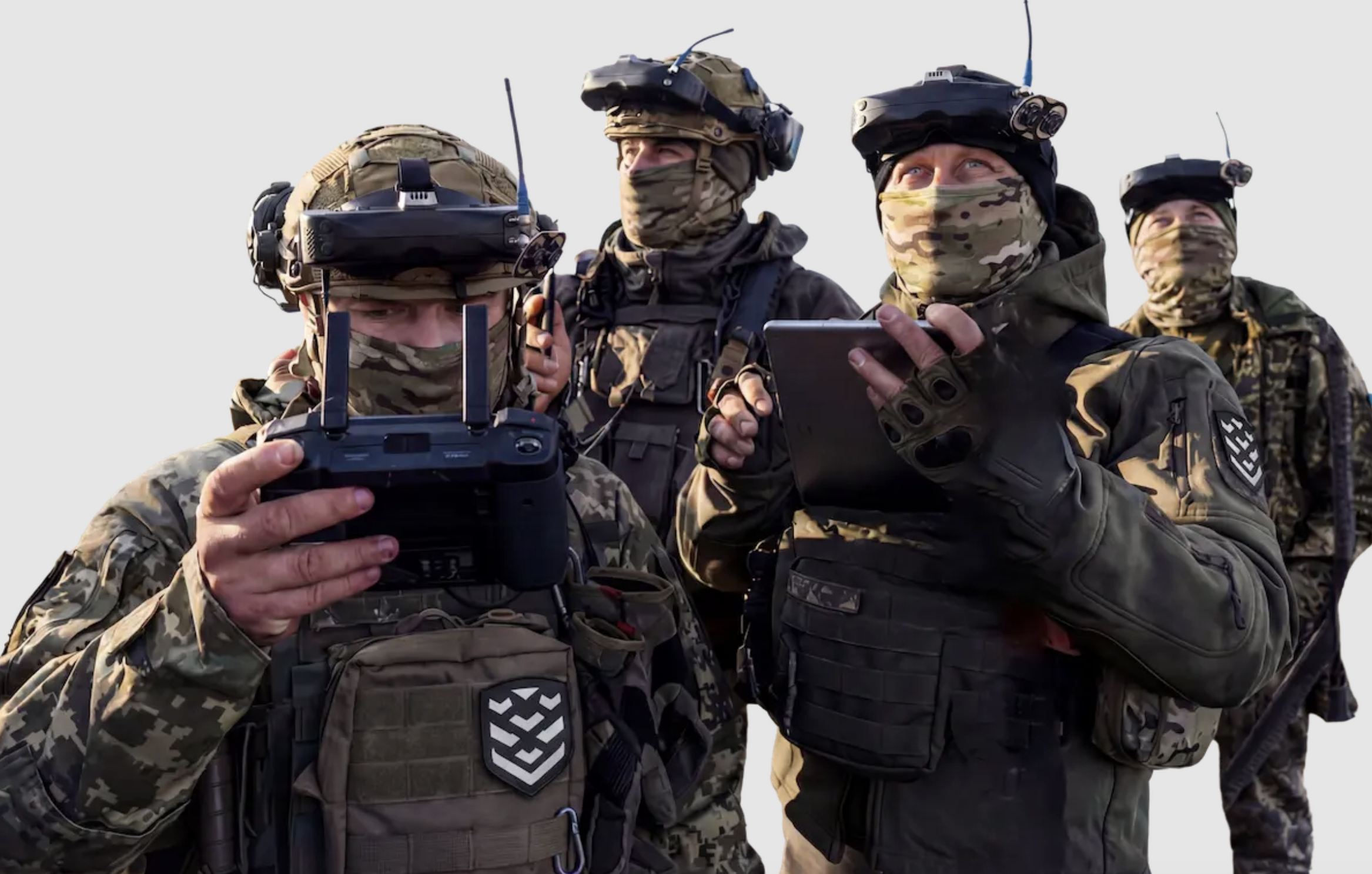
– One of the key limitations in drone use is the human factor. Each drone or robot is effectively controlled by a separate person. To coordinate the work of multiple devices, outdated approaches are used. We’re working on getting drones to work together as a swarm – under human supervision, but without constant manual intervention. It’s about scale – you can control not just one drone, but hundreds, and the system synchronizes their actions on its own. Investors are interested in this precisely as a scaling technology.
– How do you explain such a strong market reaction? Shares were trading at $5; now they’re around $40. Is this more about the product, defense technologies, or investors’ genuine interest in the Ukrainian experience?
– There are several factors at play here. First, we’re a rather unusual company for the market. On the one hand, we’ve done our job very well. On the other, we were fortunate to catch a favorable moment. We have a strong team, we’re a well-coordinated company, we have combat-ready technologies, and Ukraine – all of this has come together to form a fairly solid story.
At the same time, we understand that we are still in the early stages. Our task now is to keep working. We raised the funds we wanted to raise, and for us, the IPO campaign was a success. But as a Ukrainian, I am very pleased that we succeeded and that Ukraine is now setting a very high bar.
– What changes did you have to make within the company to enter the stock market?
– We had to restructure very little. Fortunately, we built the company in a more mature way from the start. Of course, I spent two weeks in a mode where every other email looked something like this: “We need to resolve this minor issue immediately, otherwise it could delay our IPO.” But in reality, it was about a large number of small details.
Systematically, we simply aligned our accounting and financial reporting with the required standards. We already had offices in Ukraine, the U.S., and Warsaw, and financial planning in those locations had been set up correctly from the start. We re-signed a few non-disclosure agreements and polished up the documentation – but that was mostly a formality we were already prepared for.
– What has changed in the company’s management since going public?
– During the preparation process, we hired a very strong CFO with the relevant experience – Brooks Ensign. He brought the right culture and approach.
The biggest tactical change was the U.S. Securities and Exchange Commission’s (SEC) direct requirement regarding Form 8-K. If something very good or very bad happens at the company – for instance, signing a major contract or a data breach – we have 72 business hours to report it to the SEC. If we fail to do so, it will be very costly.
This directly impacts our planning. Even a successful or unsuccessful covert military mission could potentially be a significant development, and we need to quickly assess whether we should disclose this to the market, as it could affect the stock price.
Furthermore, the level of transparency we must now ensure is entirely different. Our investors are no longer just professional venture capitalists. They’re the proverbial “grandma from Arizona” or a pension fund. And that’s why we have to take this very seriously. In fact, it helps more than it hinders: this phase has solidified our sound values, and our interaction with investors has moved to a whole new level.
– The war requires businesses to operate with a short planning horizon. Has going public allowed you to look further ahead?
– It has allowed us to plan not for three months, but for twelve. And for us, that’s already a very good horizon. We’re now restructuring our budgeting into a more mature format. We’re moving toward one-year planning that we can trust, and three-year planning, which used to be effectively just one year.
But the mere fact of going public has very little impact on the dynamics of the macroenvironment. The circumstances of the war haven’t gone anywhere.
– Did the IPO affect the location of the offices? Did the core expertise continue to be based in Kyiv?
– It didn’t affect it at all. In the U.S., we mainly have a team consisting of the CFO, the SEC Director, and other roles specifically needed for a public company. All development remains in Kyiv. We also hire people in Warsaw – for specific functions and to work with European markets.
– Did the Nasdaq listing alleviate at least some of investors’ concerns regarding the Ukrainian legal system and corporate governance?
– I hope so. A friend of mine who was closing a Series A round for a defense startup said their valuation doubled just after the news about our IPO. If there are even a few such cases, I’ll consider our mission accomplished.
We’re a Ukrainian company with Ukrainian development that has passed all global compliance requirements. An IPO is a point of no return, after which you enter the system of modern Western financial instruments. This is something our market is sorely lacking.
I would very much like for us not to be the last ones, and for us to already have a club of anonymous CEOs of Ukrainian defense companies that have gone public in two years’ time.
– Before going public, Swarmer went through several rounds of fundraising – $2.7 million, then $15 million. What changed from round to round?
– Everything changed. We try to follow the classic funding model. If you call it a seed round, it has to look and sound like a real seed round. If it’s Series A, then it has to be Series A.
The first round was seed – testing the technology, confirming that we could actually do it. Series A is about scaling, implementation, and sales. The technology passed its first test. And from there, it’s clear how to invest in scaling it.
We went through the validation process like never before. So internal readiness, compliance with requirements, and having the internal documentation in order – that’s a whole different story.
– What steps did you take from the decision to “raise a round” to signing the agreement?
– The decision to raise a round was made back when we were raising our first funds, because we had a rough plan for how and at what pace we needed to grow over the next two years.
The first step is planning, the second is execution, and the third and most important is preparing the presentation for investors. It’s not just about making slides. It’s the best reality check a team can have. Everything you’ve dreamed up that doesn’t translate well into a presentation often falls apart when it hits reality.
Creating a strong presentation is challenging. We spent over a month on it and produced several drafts. We sought advice from everyone we could. I recommend doing the same. A presentation isn’t a secret – consider everything you’ve shown people to already be on some shared drive. So don’t hesitate to ask for any feedback.
Next up – meetings with funds. You have to be prepared for the fact that it’s like selling boiled corn on the beach in Odesa. Last time I had 100 meetings – and this time it’s the same. A good benchmark is 2–3 meetings a day. It’s important not to lose steam after the second week, when you’re already sick and tired of telling the same thing over and over to people who often ask awkward and confusing questions.
Once the fund realizes it wants to invest, you need to get the preliminary terms of the deal and start negotiating. There’s a delicate issue here – when exactly to sign the non-disclosure agreement, since this is the defense sector. We had prepared a separate information package: a version without the NDA – no company name, clients, or details. The version with the NDA included significantly more information. If an investor wanted to go deeper, they signed the agreement. After that – closing the deal.
– What were the most common concerns raised by investors?
– In 2025, the most frequently asked question was: “What will you do when the war ends?” And we had an answer for that.
We fully understood that we were raising the largest public funding round in Ukrainian history. In our market, it used to be like this: if we raised $5 million, the deal was signed right away. But here it was: “Wow, you’re looking for $10 million. That’s a whole different story. Show us more of this.” Smaller amounts are signed off normally. But for the big checks, we tried to make it easier for those who come after us.
– The team and the product are located in a country at war: mobilization, power outages, physical security of the offices. Were there any questions from investors about that?
– Yes, there were questions. Our office is completely self-sufficient, and we talked about that. The people who invested in us even came to see it – that really solidified their decision. In general, the plan already included expanding the team in Poland and the U.S., so that issue was partially resolved.
There were geopolitical risks. And here, as a Ukrainian, it’s unpleasant for me, but I completely understand the investors. They want to know what will happen if the office in Ukraine stops operating tomorrow. You need to have answers to that.
In reality, investors aren’t interested in specific answers, but rather whether you have a plan and whether you’ve thought it through.
– Were there any investors who were put off by the topic of autonomous systems and artificial intelligence in weapons?
– In 2025, no one asked about that in this funding round – and that’s good news. Such risks existed before. We highlighted them right away in the presentation: we knew those questions would come up, so we briefly explained our stance on the matter. If there’s an obvious critical risk, don’t wait until you’re asked about it. You need to address it very briefly right at the start.
Our approach is simple: just because a decision-maker now has a more powerful tool doesn’t mean responsibility has shifted from the person to that tool.
– What fundamentally distinguishes raising investment in Ukraine from the same process in a peaceful country?
– A company in a country at war has a very short planning horizon. This helps it adapt and move quickly, but it severely hinders long-term planning and the raising of significant funds. To think two years ahead, you literally have to step outside the environment.
A European or American startup thinks big and seeks significantly larger sums. When you’re at war, the planning horizon is two weeks. If you can’t do something by tomorrow, it’s as if it doesn’t exist. This is a fundamental difference, but it affects many things.
– What added value, besides money, did investors provide you with?
– Introductions to companies and clients, but even more so—consulting. We needed advice on a particular market or a specific issue. Usually, all it took was asking—and within two hours, I was already in touch with the person we’d been talking to. These were truly unique individuals whom it would have taken me a very long time to find on my own.
Thanks to the investors, we can reach anyone in the world with just two handshakes.
– Have you turned to government support tools, grants or programs like Brave1?
– I want to say a huge thank you to Brave1. I have experience working with the government, and I’m still amazed that such a competent, transparent, and active organization can exist within a government structure. We’re currently in the process of implementing two grants. Thank you to former director Natalia Kushnerska and current director Andriy Hrytsenyuk. They are doing a tremendous job. This includes liaising with the military, relevant startups, and key teams.
– What changes in government policy would most help Ukrainian defense companies attract foreign investment?
– I would be very happy if the government adopted Estonia’s approach and we had the same system for registering companies, transparently allocating ownership, and processing investment documents online.
When a Ukrainian team tells an investor, “We have a legal entity in Estonia,” and there are standard agreement templates, everything can be done online, and everything is transparent – that’s one thing. But there are teams that say, “We’re looking for $5 million; you’ll get a stake in a Ukrainian LLC.” And investors respond: “We already know what the Pechersky District Court is.” This makes it very difficult to raise funds. But given how much has changed over the past three years, I think this will change.
– If we roughly divide the $15 million, where does the bulk of it go?
– If we exclude operating expenses, that’s about 10%, including equipment. 70% goes toward the core product and integrating everything needed for it to work with different users. 30% goes toward the engineering and marketing team that will work with new clients.
– How did the investment affect your team-building strategy?
– The core expertise remains in Kyiv. We’re building a distributed team across different locations and try to hire Ukrainians wherever possible. The hiring strategy was established before the investment, and we raised funds specifically to support it. We planned to raise $10 million; we ended up with $15 million—which means we’ll be able to hire more people and do so faster.
There is one real issue: for critical specializations in the drone sector, there are literally only ten such people in the entire country, and everyone is scrambling to hire them.
– Which decisions in the investment-raising process do you consider the most successful, and which ones were mistakes?
– As for mistakes: we should have started the funding round earlier. I made the same mistake twice – a funding round takes three months. And if one of those months is August, you won’t be able to reach anyone.
The most successful decision was to sit down and work very closely with our current investors. This gave us an understanding of exactly how investors think at this stage and what their expectations are. And you’re like, “Wow, I never even thought about that, but that’s how it works.” Work with your current investors to understand how to talk to future ones, and listen carefully.
– What checklist would you give to a Ukrainian defense startup planning to raise a large funding round during the war?
– Many Ukrainian miltech teams still believe they should only give a presentation after signing a non-disclosure agreement. In reality, you need to go out and gather as much feedback and expertise as possible. Ask: “Help me.” We have a large community, and everyone who has recently closed a funding round will be happy to share their experience.
The first step is to understand exactly what an investor actually expects to hear. And ask yourself: do I really need venture capital? Venture capital isn’t suitable for every business.
Every time you have to explain something further, you lose half the audience. You have a hundred investors, and they have a hundred startups a month. Their first task is to quickly figure out who’s a good fit. Learn to speak to investors in their language and with numbers.
– What would you say to those who are unsure whether it’s worth seeking investment in Ukraine at all during the war?
– Look at us. Come and give it a try. Besides the funding rounds we’re participating in, there are others: $3 million, $1.5 million – people have raised those amounts too. It’s possible to raise funds, and it’s possible to get things done. But it has to be the right startup, the right investor, and the right match.
If you need advice, feedback, or anything else, come to me or to others in the market – everyone will help.
We’re all building a big system together. We must do everything we can to ensure that the problem we’re currently fighting across all of Ukraine doesn’t reach our children and grandchildren.
My story is public. I’m not a serial founder; I don’t have parents in some fancy fund. It’s just a very large piece of complex systemic work.
Believe in yourself and listen to what people tell you.