Defence innovation during wartime: how Trypillian turns frontline experience into a product and scales with a $5 million investment
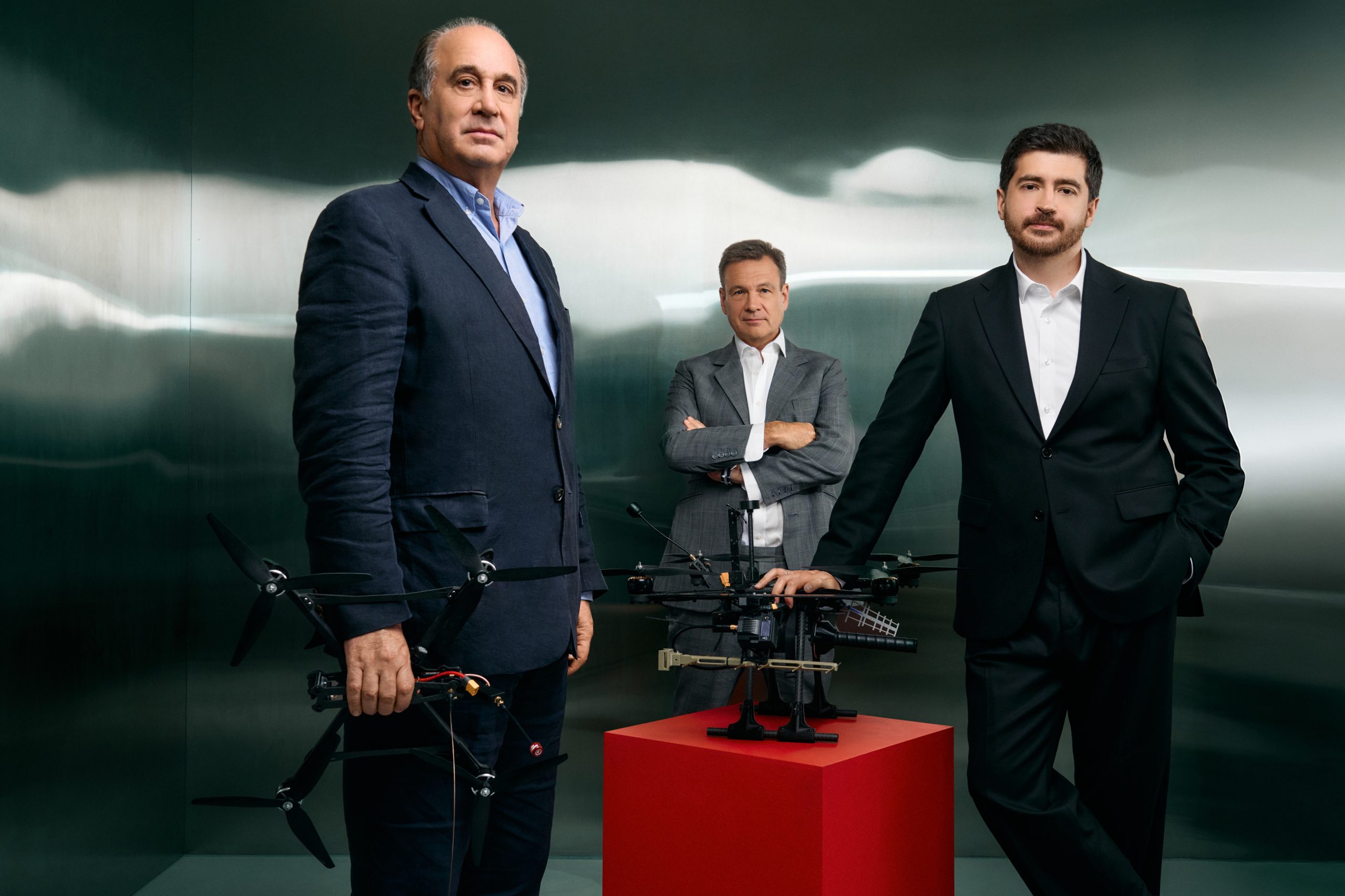
The team builds products around the full “kill chain,” drawing on combat experience, field testing with military units, and rapid iterations tailored to real frontline conditions — especially under the impact of electronic warfare (EW). In this reality, the winner is not the one with the “prettiest” device, but the one who can systematically convert frontline feedback into product updates at the pace dictated by the war.
The issue Trypillian tackles: autonomous solutions for deep strike and tactical missions
Trypillian positions itself as a developer of autonomous strike solutions focused on three areas: increasing the success rate of deep-strike missions, improving the cost-per-effect of long-range operations through high cost efficiency with the ability to penetrate deep into the enemy’s rear, and delivering multiple layers of impact by combining kinetic and informational effects using the I.R.I.S. platform.
The company aims to raise the success rate of long-range missions through its approach to payload delivery and navigation technologies designed to operate in contested environments.
At the same time, it is focused on improving cost-per-effect — the ratio between cost and outcome — by increasing efficiency and enhancing the ability to reach deep behind enemy lines. It also emphasizes what it describes as “multiple-effect strike capability,” achieved by combining kinetic and informational impact within a single solution.
Integrated cognitive operations platform designed to coordinate information operations and generate systemic effects within the modern information environment.
A $5M wartime investment: how the investor emerged and what proved decisive
Trypillian’s financing story is unusual for defence tech. CEO Ivan Matveichenko met Brooks Newmark on LinkedIn while undergoing rehabilitation in hospital after a combat injury. Initially, the conversation was about investing in Ukrainian defence-tech projects in general, but it soon became clear that a more effective path was to build a dedicated company at the intersection of combat experience, a deep understanding of modern war, and a Western approach to innovation.
The $5 million investment was more than funding: Newmark joined as Founder & Chairman, bringing management expertise, international business experience, and a strong network.
Decisive factors included the combination of Ivan’s combat experience, strategic thinking, and inside understanding of the war, alongside a strong track record in investment management. It also mattered that Newmark has long supported Ukraine through the “Angels for Ukraine” charity fund, and the creation of Trypillian became a continuation of that mission — a shift from humanitarian aid to systemic participation in strengthening defence capability.
Tactical UAVs as a “process,” not “hardware”: what the kill chain means in practice
In the tactical segment, the company stresses that this is not about individual drone models, but about an integrated system — a “set of solutions” for a unit. Joint operational trials of the full tactical UAV line with Ukrainian forces have already started; in parallel, the deep-strike system continues to be refined through active field testing.
This leads to a key thesis: “short-range strike UAVs are not a product — they are a process.” The product is not the drone itself, but an effective deterrence zone that can be sustained over time. That requires the full kill chain: spare-parts logistics, timely delivery to the front line, frontline workshops, repairability, UX solutions that reduce training time, and — most importantly — continuous adaptation to EW and changes in enemy tactics. That is why Trypillian prioritises mass reliability and accessibility: innovation without scale does not deliver practical battlefield impact.
How product decisions are made: feedback, production constraints, and investor expectations
Trypillian structures the conversion of frontline feedback into product as a balance of three vectors: the needs of combat units, production constraints, and investor expectations. The company cannot endlessly customize solutions for dozens of teams, because that creates dozens of unique products and breaks scalability.
At the same time, investors want to see not only what “works now,” but a long-term technological trajectory. Hence a combined approach: what proves effective on the front is produced at scale, while small-batch trials run in parallel for solutions that may not be needed “right now,” but have future potential.
In practice, the most frequent changes relate to connectivity and EW resilience. Operator convenience is not always formalised as a requirement, but when it is improved, units respond very positively. Another challenge is uneven maturity across units, so Trypillian transfers best practices from stronger combat teams and implements them as standardised solutions for less experienced ones.
Scaling and entering Europe: why battlefield testing is no longer enough
Despite active development in the tactical direction, the team’s main focus is currently on deep strike, while the tactical UAV team is scaling rapidly. The company measures testing success pragmatically: through orders, because a unit’s willingness to pay from a limited budget is the strongest indicator of real product value.
The balance between speed and quality is maintained through modularity and short iteration cycles: quick validation, fixes, and refinement of what works in the field. In this logic, the “ideal” is seen as the enemy of tempo in defence tech.
The scaling model is hybrid: key technologies and R&D remain in-house, while production expansion happens through vetted partners. Next year, the company plans to expand its internal team to sustain the pace of innovation.
In Europe, Trypillian is betting on the combination of combat experience with Western business standards and a leadership team bridging Ukrainian veterans and Western experts. The company emphasises that “battle-tested” is no longer a sufficient proof of maturity: foreign customers also require delivery speed, standards/certifications, service, and training.
Moreover, combat experience has an “expiration date”: for tactical UAVs it is about one month, because the battlefield changes too fast. Trypillian sees the most realistic first customers in Europe as armed forces and government institutions.